ASUS ROG Swift OLED PG32UCDM Gen3 vs ASUS ROG Swift OLED PG32UCDP
Both ASUS ROG Swift OLED monitors offer 4K resolution at 240Hz with QD-OLED panels for deep blacks and fast response. The PG32UCDM Gen3 is positioned as a premium all-rounder, while the PG32UCDP adds a dual-mode feature, allowing you to switch to 1080p at 480Hz for extreme competitive smoothness.
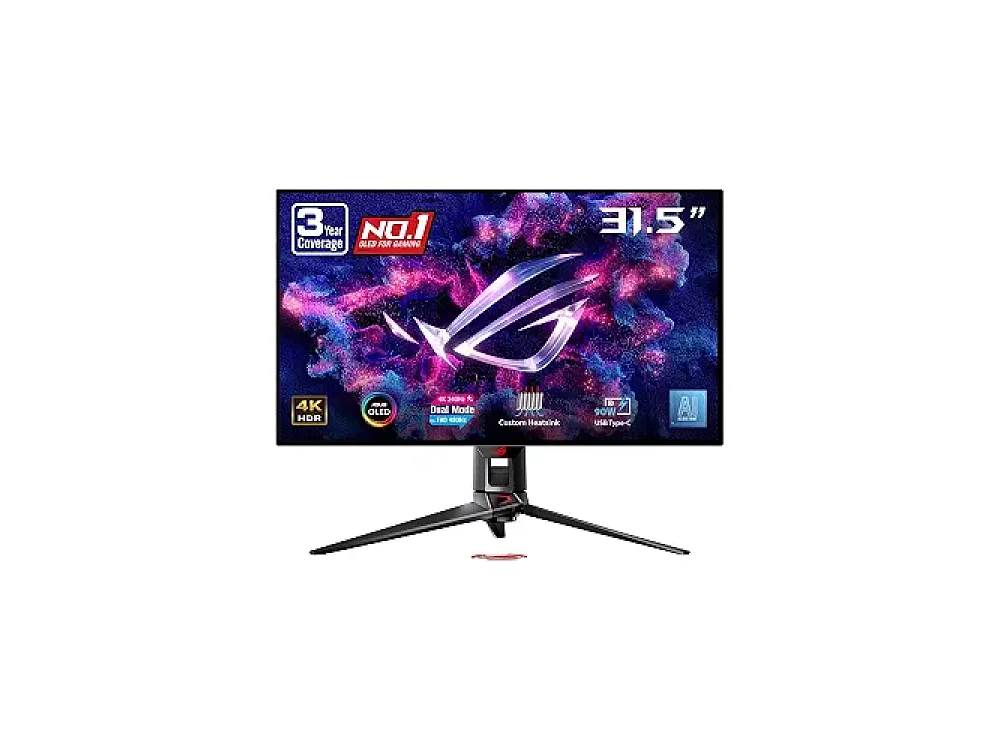 VS
VS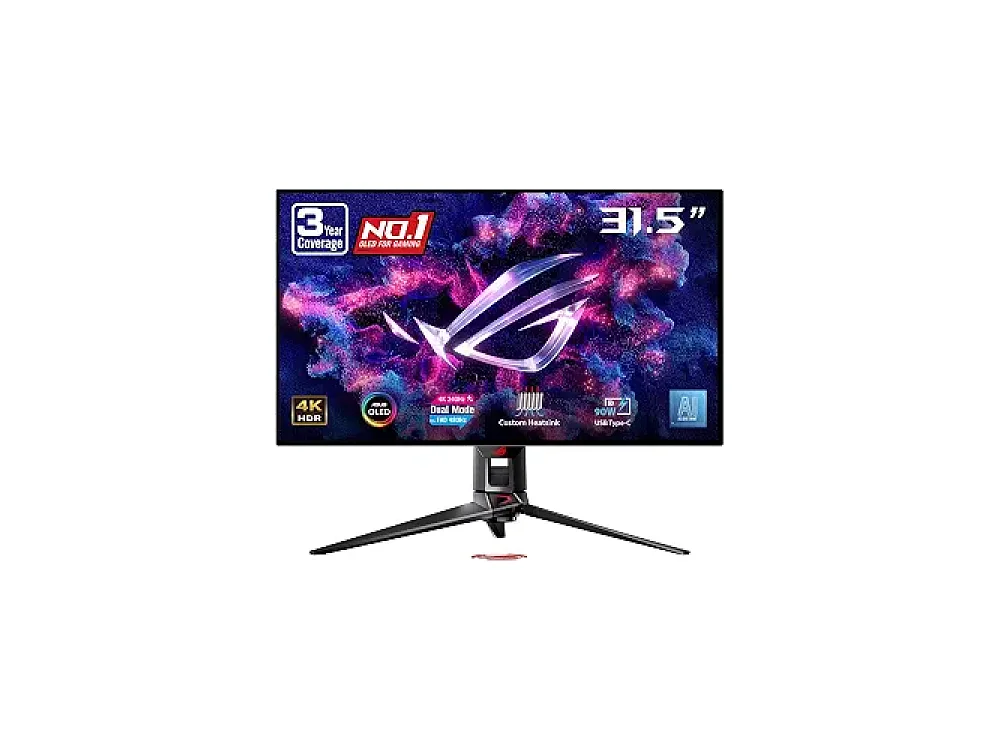
ASUS ROG Swift OLED PG32UCDM Gen3
Best Overall / PremiumASUS ROG Swift OLED PG32UCDM Gen3 is the right choice if you want a premium 4K monitor that balances high refresh rates with excellent HDR and color accuracy for both gaming and creative work.
ASUS ROG Swift OLED PG32UCDP
Best Dual-Mode OLEDASUS ROG Swift OLED PG32UCDP suits competitive players who want the option to drop resolution to 1080p for 480Hz refresh rates, prioritizing maximum frame smoothness over 4K detail in fast-paced titles.
The differences that matter
- The PG32UCDP supports a dual-mode setup with 1080p at 480Hz, whereas the PG32UCDM Gen3 focuses on its 4K 240Hz performance.
- The PG32UCDM Gen3 is categorized as the best overall premium option, while the PG32UCDP is highlighted specifically for its dual-mode capabilities.
- Both monitors share the same core panel technology (QD-OLED) and 4K resolution, but the PG32UCDP explicitly lists 32-inch sizing in its key specs.
- The PG32UCDM Gen3 emphasizes strong HDR performance and premium build quality, while the PG32UCDP highlights near-instant pixel response to eliminate ghosting.
- Buyers of the PG32UCDP should verify VESA mounting compatibility, a feature explicitly noted for that model, while the Gen3 focuses on tilt adjustment and low-profile stand design.
Specs side by side
| ASUS ROG Swift OLED PG32UCDM Gen3 | ASUS ROG Swift OLED PG32UCDP | |
|---|---|---|
| Brand | ASUS | ASUS |
| Best For | Best Overall / Premium | Best Dual-Mode OLED |
| Key Specs | 4K · 240Hz · QD-OLED | 32-inch · 4K 240Hz · 1080p 480Hz OLED |
Pros and cons
ASUS ROG Swift OLED PG32UCDM Gen3
- 4K resolution with QD-OLED colour depth
- 240 Hz refresh for ultra-smooth motion
- Low input lag suitable for competitive play
- Strong HDR performance
- Premium build quality
- Higher power draw typical of OLED panels
- Potential risk of burn-in with static UI elements
- Premium price point
ASUS ROG Swift OLED PG32UCDP
- Dual-mode 4K 240 Hz and 1080p 480 Hz OLED panel
- Near-instant pixel response eliminates ghosting
- High refresh rates benefit competitive and cinematic gaming
- Deep blacks and high contrast from OLED technology
- Adjustable tilt stand and VESA-compatible mounting
- OLED panels can be prone to temporary image retention
- Higher power consumption than typical LCD monitors
- Premium price may be out of reach for casual gamers
ASUS ROG Swift OLED PG32UCDM Gen3 vs ASUS ROG Swift OLED PG32UCDP: questions
Which monitor is better for competitive shooters?
The PG32UCDP is likely the better fit for pure competitive play due to its 1080p 480Hz mode, which offers higher refresh rates than the Gen3's 240Hz. However, the Gen3 still provides low input lag suitable for competitive play at 4K.
What is the main difference between these two models?
The primary difference is the dual-mode capability of the PG32UCDP, which allows switching between 4K 240Hz and 1080p 480Hz. The PG32UCDM Gen3 is a standard 4K 240Hz QD-OLED monitor without that specific dual-resolution refresh mode.
Is the PG32UCDP worth it over the Gen3?
It depends on whether you need the extra 480Hz frame rate at 1080p. If you play fast-paced competitive titles and have a GPU capable of driving those frame rates, the PG32UCDP offers more flexibility. Otherwise, the Gen3 may be sufficient for a balanced 4K experience.
More on Run On Console
We compare what each product's own specs and listing say; we do not show prices because they change every day. We may earn a commission from qualifying purchases.